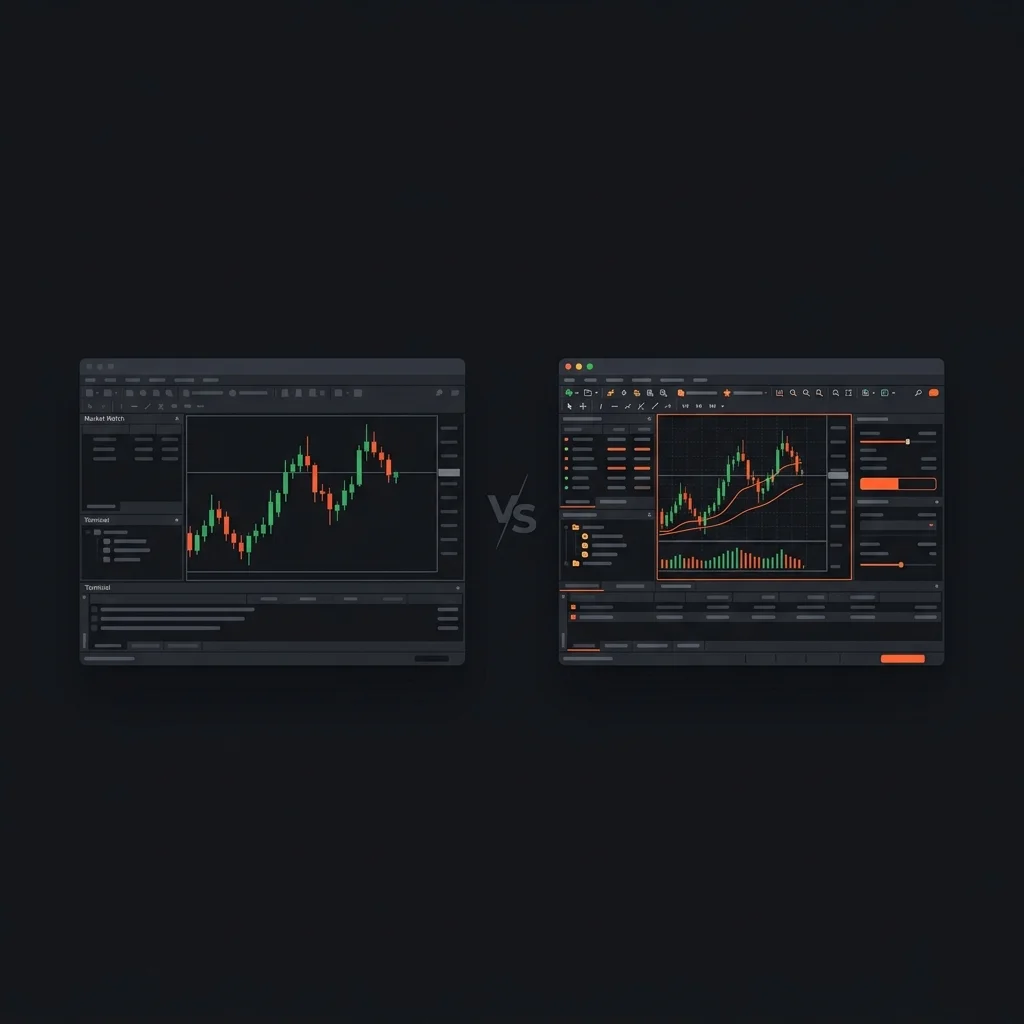
MT5 vs MT4 for trading journals
MT4 and MT5 can both supply a useful trading journal. The better choice is not simply the newer platform: it is the one your broker, strategy, and account type require. For journaling, the meaningful difference is the quality and structure of the trade history you can capture, then whether you can review it without losing partial fills, commissions, swaps, or the connection between an order and its final result.
MT4 remains common in retail forex. Its familiar interface and large broker support make it practical for many traders, especially when an existing strategy or EA already runs there. MT5 is newer and supports more asset classes and account configurations. It also records trading activity with a more detailed order/deal/position model, which can make a complex history easier to reconcile when the journal understands that model correctly.
How the data models differ
MT4 history is often experienced as a list of orders and closed tickets. For simple one-entry, one-exit trades, that is usually enough. It becomes harder to interpret when you scale into a position, close part of it, pay swap overnight, or use multiple fills. A journal must decide how to group those records before the statistics are meaningful.
MT5 separates orders, deals, and positions. An order is your instruction; a deal is an execution; and a position is the resulting exposure. That separation is especially useful for partial closes, netting accounts, and detailed execution review. It does not automatically make MT5 performance better, but it gives a journal more information to preserve when calculating realised P&L and reviewing how a position was managed.
Hedging and netting matter more than the platform name
In a hedging account, long and short positions can exist at the same time. In a netting account, trades in the same instrument are combined into one net position. MT5 supports both account modes, depending on the broker. Before you judge a journal import, check that it recognises the mode your account uses. A report that treats a partial reduction as a new trade can distort win rate, average risk, and holding time.
MT4 is normally associated with hedging-style workflows, although exact account behaviour remains broker-dependent. If you trade one position at a time and mainly want clean daily review, MT4 data can be adequate. If you regularly scale in and out, trade several fills, or need more precise reconciliation, MT5’s richer history is usually easier to audit.
Exports, sync, and data checks
Whatever terminal you use, test the journal with a small set of known trades before importing years of history. Compare entry and exit time, volume, commissions, swap, and net result against the terminal statement. Then check one partial close and one overnight position. This catches mapping problems early and gives you confidence that profit factor and drawdown are calculated from the numbers you actually paid or received.
EdgelogSync supports closed-position sync from both MT4 and MT5. The journal can then pair the imported result with your own setup tags, screenshots, notes, and execution rating. If automatic sync is not an option for your broker, export CSV or Excel history and verify the column mapping before treating analytics as a source of truth.
Which platform should you choose?
Choose MT4 when your broker, existing EA, or trading workflow depends on it and the history you receive is sufficient for your review. Choose MT5 when you are starting fresh, need a broker that only offers MT5, trade netting or more complex positions, or want the more detailed order/deal/position records. Do not migrate only for the word advanced; migrate when the additional data solves a review problem you actually have.
For a straightforward journal habit, consistency beats platform choice. Review the same fields every week: setup, risk, result, execution quality, and mistake tags. Use the risk-to-reward calculator before entry, then compare the intended R multiple with the completed trade afterwards. Over time, that repeatable review will improve decisions more than switching platforms alone.
Bottom line
MT5 generally offers the cleaner data model for detailed journaling, particularly for partial fills and netting. MT4 remains a valid choice for traders whose broker or tools require it. Pick the platform that lets you capture complete, reconcilable history and maintain a consistent review habit. The best journal is the one whose data you trust enough to use when making the next trading decision.