Why Your Journal Choice Matters More on a Small Account
You're trading a $500 account, or grinding through a $10k prop-firm challenge. Every dollar counts — including the ones you spend on tools. So when you're weighing up a TradeViz alternative, "it's a bit cheaper" isn't good enough. You need to know exactly what you're giving up and what you're gaining.
This post breaks down the real differences between TradeViz and Edgelog: pricing, MT4/MT5 syncing, analytics depth, and the stuff that actually moves the needle for undercapitalised traders. No paid placement here. Just a direct comparison so you can make the right call.
What TradeViz Gets Right
TradeViz has earned its reputation. It's a well-built journal with solid trade analytics, a clean interface, and a decent import flow. If you're already using it, you know it's a step up from a spreadsheet.
A few things it does well:
- Detailed trade statistics — win rate, average R, expectancy, and session-level breakdowns are all there.
- Broker import support — it handles CSV imports from a wide range of brokers.
- Equity curve visualisation — you get a clear picture of your account trajectory over time.
For traders on larger funded accounts or consistent monthly profitability, the subscription cost probably doesn't sting. But that's not everyone. And for the trader starting out or running a prop challenge on a tight budget, the pricing model starts to feel like friction.
Where the Cost Becomes a Real Problem
Here's the part most review posts gloss over. TradeViz's free tier is limited enough that you'll hit the ceiling fast — especially if you're an active scalper or day trader logging 20–50 trades a week. Once you need full historical data, advanced filters, or unlimited trade imports, you're looking at a paid plan.
That's a legitimate business model. But think about what it means for you specifically:
- You're paying a monthly fee before you've proven your edge.
- If you're on a prop challenge, your capital is already at risk.
- If you blow the challenge, you've lost the entry fee and your journal subscription for that month.
For a trader doing 3–4 prop challenges a year at $150–$300 a pop, tool costs add up faster than you'd expect. Sound familiar?
Edgelog as a TradeViz Alternative: What You Actually Get Free
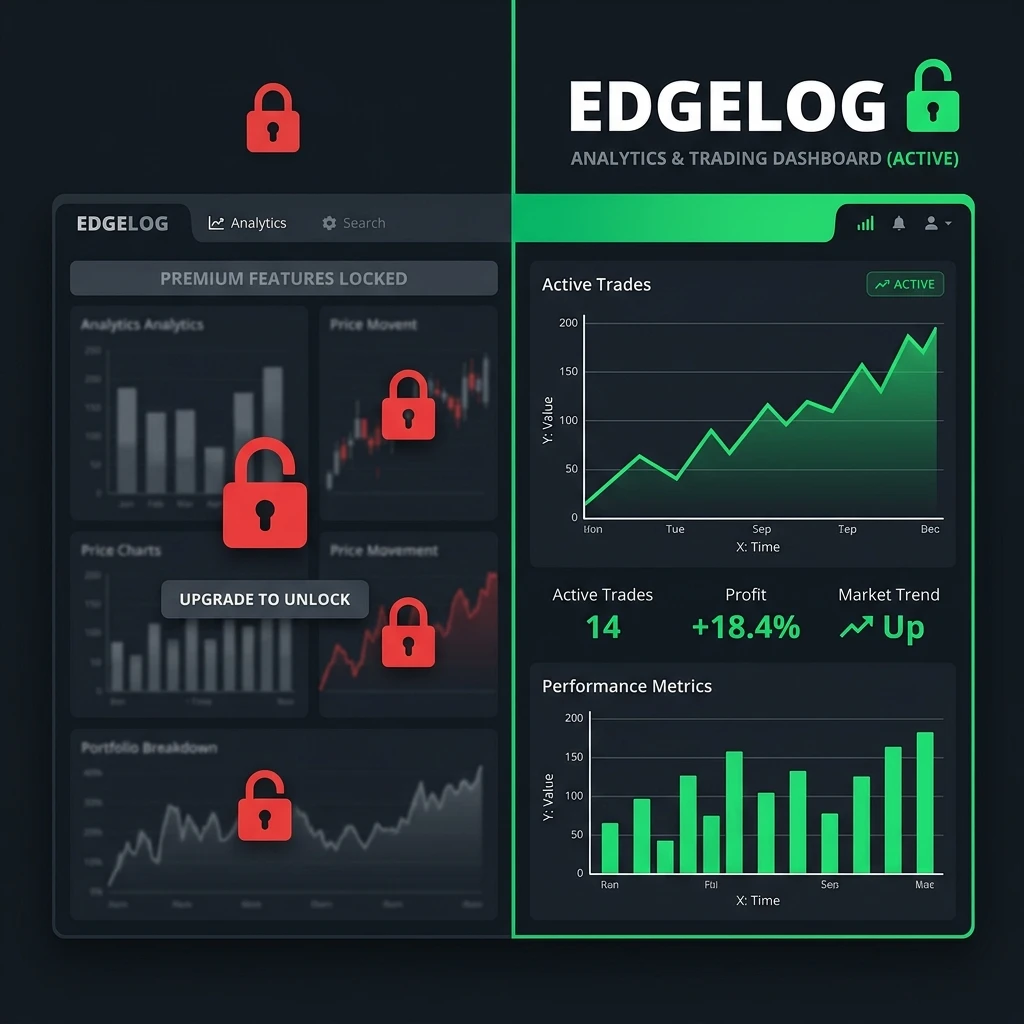
Edgelog is built around one premise: the journaling discipline that improves your trading shouldn't cost you money before you've made any. The entire core feature set is free. Not "free trial" — free.
Here's what you get without touching your wallet:
- MT4/MT5 auto-sync via Expert Advisor — your trades appear in the journal automatically after every close. No manual CSV exports, no copy-paste errors.
- Performance analytics — win rate, profit factor, average RR, drawdown, and equity curve, all updated in real time.
- Trade tagging — tag by setup, session, currency pair, or anything else you want to track. Then filter your stats by that tag to see if your London breakout setup actually performs differently from your NY session trades.
- Mindset journaling — log your emotional state per trade. Over time, you'll start seeing patterns between your psychology and your P&L that no pure analytics tool will show you.
- Strategy playbook — document your setups formally, so you're trading rules, not impulses.
That's not a stripped-down free tier. That's a full working journal. Start a free trading journal and you'll have trades syncing into it within 20 minutes.
Head-to-Head: The Metrics That Matter for Small Account Traders
Let's get specific about the comparison across the factors that actually matter when you're watching your balance.
Cost TradeViz's free plan caps your history and trade volume. Edgelog's core feature set has no cap and no credit card required.
MT4/MT5 Integration This is where Edgelog has a meaningful edge. The Expert Advisor pushes your trade data directly — open price, close price, SL, TP, duration, result — without any manual step. TradeViz relies primarily on CSV imports, which means you have to remember to export, and your journal is always slightly behind. If you're doing 30 trades a week, that friction is real.
Analytics Depth Both platforms give you the core stats. TradeViz offers some additional breakdowns at higher tiers. Edgelog covers the metrics most retail traders actually use to improve — drawdown %, profit factor, win rate by tag, and equity curve — all at no cost.
Psychology Tracking TradeViz focuses on the numbers. Edgelog adds the mindset layer, which is something prop firms increasingly emphasise in their trader development content. If you've ever blown a challenge on a revenge trade after three losing days, you already know why logging your emotional state matters.
Prop Firm Fit Both tools work for prop traders. But when you're paying $200 for a challenge entry, using a free journal that does the same job isn't a compromise — it's just sensible capital allocation.
How to Actually Use Your Journal to Improve Faster
Switching tools doesn't improve your trading. Using the tool correctly does. Here's a repeatable weekly process that works whether you're on Edgelog or anything else:
- Log every trade — don't cherrypick. Your stats are only honest if they include the bad days.
- Tag each trade by setup — after 50 trades, your win rate by setup will tell you more than your overall win rate ever will.
- Write one sentence per trade — what did you see, and did the trade follow your plan? That's it. You don't need paragraphs.
- Review weekly, not daily — daily review creates noise. Weekly review shows trends.
- Build your playbook from winning setups — once a setup has 20+ tagged trades with a positive expectancy, write it up formally in your strategy playbook. Now you're trading a documented edge.