The Most Profitable Window Is Also the Hardest to Learn From
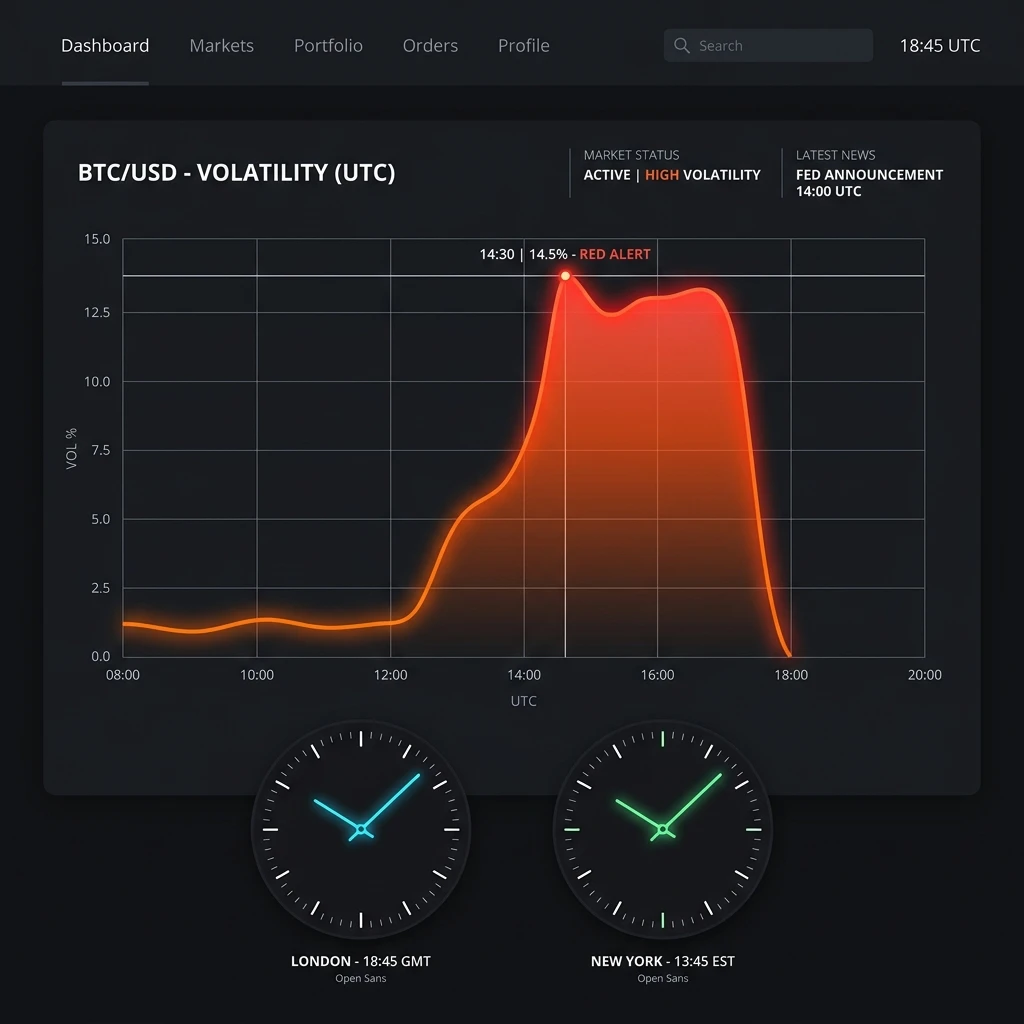
The London-New York crossover — roughly 12:00 to 17:00 UTC — is where careers are made and accounts are blown. Spreads tighten, volume spikes, and major pairs like EUR/USD, GBP/USD, and USD/JPY can move 80–120 pips in a single hour. It's the session most retail traders target specifically because of that energy.
It's also the session most traders journal worst.
If your win rate looks inexplicably lower on Tuesdays and Wednesdays, or your average loss is nearly double your average win for no obvious reason, there's a good chance your crossover trades are contaminating your data. Not because the session is random — it isn't — but because it demands a level of journaling precision that a simple "entry, exit, P&L" log can't give you.
This post breaks down exactly why London-New York crossover trading is so hard to document accurately, and what you need to capture to actually learn from it.
---
Why Crossover Trades Break Your Performance Metrics
Most trading journals treat all trades the same. A EUR/USD long opened at 08:00 UTC during the London session gets logged the same way as one opened at 13:30 UTC during the crossover. Same pair, same direction — but completely different beasts.
Here's the problem: crossover trades almost always have wider actual slippage, faster stop-hit rates, and more "fake-out" behaviour than their London-only or New York-only counterparts. When you lump them together, a few things happen.
- Your win rate looks lower than your strategy actually deserves during cleaner sessions.
- Your average loss figure gets pulled up by those violent stop-hunts that only happen during the crossover.
- Your profit factor gets skewed, making a genuinely profitable strategy look mediocre — or making a losing one look breakeven.
Say you're running a breakout strategy on GBP/USD. In the London session alone, it wins 58% of the time. During the crossover, that same setup wins 41% because of the noise and reversals. If you journal them together, you see a blended 49% win rate and conclude the strategy is borderline. You might abandon something that's actually solid — or keep trading something that's actually bleeding you.
Tag your sessions. Every single time.
---
The Three Specific Problems With Crossover Journaling
1. You Can't Attribute the Move to a Single Catalyst
During the crossover, you're often dealing with overlapping news from both London and New York. A Bank of England comment lands at 12:15 UTC. Twenty minutes later, US retail sales data drops. Your trade entry was at 12:05. So what drove your winner — the BoE headline, the data release, or just the underlying trend?
Without tagging the catalyst separately from the session, you'll never know. And if you don't know, you can't replicate it.
2. Execution Quality Degrades in Ways That Feel Like Strategy Failure
Even with tight spreads, the crossover sees sharp, sudden spread widening around high-impact news — sometimes jumping from 0.5 pips to 3–4 pips on EUR/USD in under a second. If your stop was 15 pips and you got filled at 18 pips, your journal probably just logged an 18-pip loss. But the extra 3 pips wasn't strategy error. It was execution noise.
If you don't track slippage separately, you'll misread your risk-reward and adjust your stop distances unnecessarily, corrupting your whole setup going forward.
3. Emotional State Is More Volatile Than the Chart
Sound familiar? You watch EUR/USD whipsaw 40 pips in three minutes, hit your stop, reverse right back to your original target, and you're left staring at a red trade that "should have" been a winner. The emotional weight of that experience is real — and it directly affects your next trade.
If you're not journaling your mindset during crossover sessions specifically, you're missing the most important variable. Revenge trades almost always happen in the 30 minutes after a crossover stop-hunt. That's not a hunch — most experienced traders will tell you that pattern holds.
---
What a Proper Crossover Journal Entry Looks Like
Here's what a high-quality log for a London-New York crossover trade should capture, beyond the basics:
- Session tag — Mark it explicitly as "London-New York crossover," not just "London" or "NY."
- Catalyst log — Note any news events within 60 minutes of your entry, even if you didn't trade the news directly.
- Spread at entry — Screenshot or manually note the spread when you entered. You'll want this later.
- Slippage — Record the difference between your intended fill and actual fill.
- Volatility context — Was it a trending crossover (directional flow from London continuing into NY) or a reversal crossover (NY fading London's move)? These two environments need different strategies.
- Emotional rating — A simple 1–5 scale for confidence, patience, and FOMO pressure at the time of entry.
- Post-trade reflection — What would you have done differently, and does that change apply to crossover conditions only?
This level of detail sounds like a lot. It takes about four minutes per trade. That's it.
---
How to Use Session Data to Sharpen Your Edge
Once you've been tagging sessions consistently for 30–60 trades, patterns emerge fast. You might discover:
- You're actually profitable during the crossover on trending days but lose money on news-heavy days.
- Your long setups work during the crossover but your short setups don't — possibly because you're fighting NY institutional order flow without realising it.
- Your emotional ratings of 4–5 (high confidence) during the crossover correlate with your worst trades, meaning you're most overconfident when the market feels most alive.
These aren't insights you can get from a spreadsheet that just tracks entry and exit. They come from structured, tagged journaling over time.
Edgelog's trade tagging and session filters are built specifically for this kind of analysis. You can tag trades by session, add custom catalyst labels, and filter your analytics to view crossover performance in isolation — so you're comparing apples to apples instead of mixing your entire trade history into one blurry average. Check the FAQ if you want to see exactly how the tagging system works.
---
The Prop Firm Angle: Crossover Sessions Are Where Challenges Are Won and Lost
If you're on a prop firm challenge, you already know the crossover is tempting. The moves are big, the opportunities look obvious, and the pressure to hit your profit target makes it easy to overtrade.
The traders who pass challenges consistently aren't the ones who avoid the crossover — they're the ones who understand their own crossover behaviour precisely. They know their win rate drops from 60% to 45% during news-driven crossovers. They know their average loss is 30% larger between 13:00 and 15:00 UTC. So they either size down, skip the session, or apply a different rule set.
That knowledge only comes from a journal that actually separates this data. Edgelog's performance dashboard shows equity curve breakdown by session tag — meaning you can see, visually, exactly where your account grows and where it leaks. For prop firm traders, that's not a nice-to-have. It's the difference between passing and blowing the account on a Friday afternoon when NY momentum runs out and whipsaws you into a max drawdown.
---
Start Treating the Crossover Like Its Own Market
London-New York crossover trading isn't just a time window — it's a distinct market environment with its own dynamics, risks, and journaling requirements. The mistake most traders make is treating a crossover EUR/USD trade the same as a quiet London morning EUR/USD trade. They're not the same. The chart might look similar, but the forces driving it, the execution risks, and the emotional pressure are completely different.
Log them differently. Tag them consistently. Review them separately. Over 60–90 days, you'll have a data set that tells you whether the crossover is an edge for you or a liability — and you'll have the specific insights to act on that answer.
If you're not doing this yet, the best time to start is today's session. Start a free trading journal with Edgelog, tag your next crossover trade properly, and begin building the data set that actually reflects how you trade — not just what price did.